
A Home for Estonian Culture on Long Island
SINCE
1950
ABOUT
Long Island Estonian House
Nestled on eleven acres of beautiful park-like grounds in Middle Island, New York, the Long Island Estonian House has been a cherished gathering place for Estonians, their families, and friends for generations. More than just a community venue, it serves as a center for cultural traditions, recreation, education, and fellowship. Throughout the year, the property hosts festivals, concerts, family celebrations, sporting activities, community gatherings, and special events that bring people together while strengthening connections to Estonian heritage and culture.
The Long Island Estonian House is also home to two of the community’s most valued programs: Suvekodu, the Long Island Estonian Summer Camp, and the Long Island Estonian School. For decades, summer camp has provided children with unforgettable experiences, lifelong friendships, and meaningful connections to Estonian traditions through outdoor activities, cultural programs, and community life. The Estonian School further supports this mission by offering opportunities for children and families to learn the Estonian language, explore cultural traditions, and deepen their understanding of their heritage. Together, these programs help ensure that Estonian culture continues to thrive and be passed on to future generations.
History of Long Island Estonian House
This historical overview has been adapted by Sven Roosild and Evi Wichman from the Long Island Estonian Home 50th Anniversary commemorative history authored by Harald Salumäe and Alfred Skonberg.
As the generations who built and shaped the Long Island Estonian Home grow older, it becomes increasingly important to preserve their stories, experiences, and accomplishments for future generations. This history serves as a record of the vision, dedication, and community spirit that transformed a simple piece of land into a lasting home for Estonian culture and community life on Long Island. The following overview explores the early years of the Long Island Estonian Home and highlights the milestones, events, and achievements that have shaped its development from 1950 to the present day.
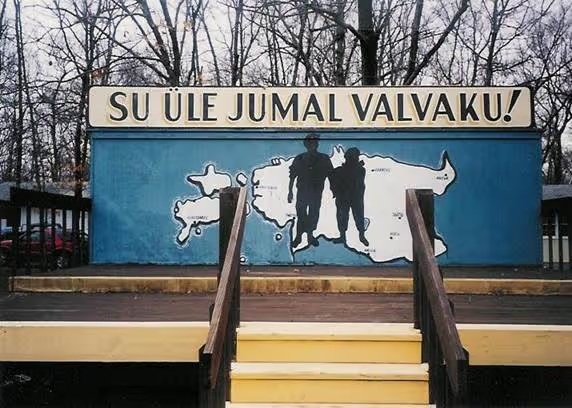
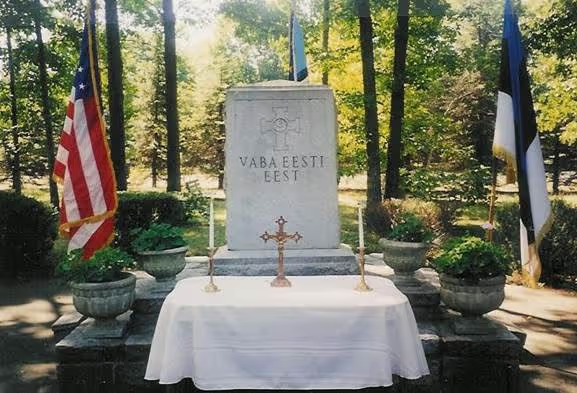
Late 1940s – Early 1950s
A Growing Community and a New Vision
Following World War II, many Estonian refugees arrived in New York and the surrounding area after fleeing Europe. The New York Estonian Educational Society became the central hub where newcomers could find information, guidance, and support as they established new lives in America.
As the Estonian community continued to grow, so did the need for a place where families could gather and where children could spend part of their summers away from the city. Community leaders envisioned a natural setting where families could enjoy recreation, swimming, sports, and cultural activities. The only practical solution was to acquire and develop land of their own.
1950
The Purchase of the First Five Acres
By this time, a small Estonian settlement had already emerged in Middle Island, Long Island. Several Estonian families had permanent homes there, while others maintained summer cottages that later became year-round residences.
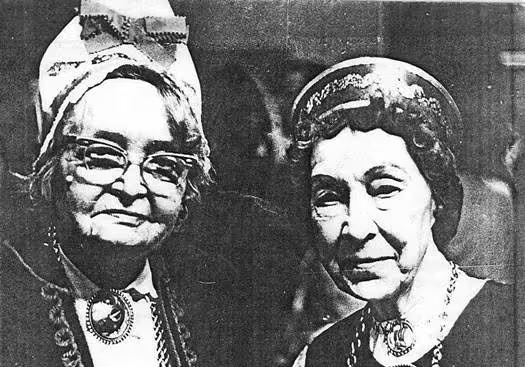
Educational Society board members Aleksandra Berg and Hilda Püss owned summer homes in the area and, together with Society Chairman Felix Simmermann, identified a suitable parcel of land offered for sale by a local farmer.
On September 12, 1950, the General Meeting of the New York Estonian Educational Society authorized the purchase of a five-acre parcel in Middle Island for $350 per acre.
1951
Expanding the Vision
Ownership of the first five acres was transferred in the spring of 1951. However, the land was heavily wooded and overgrown, making it unsuitable for large gatherings.
As a result, the 1951 Victory Day–Midsummer Day celebration was held on property owned by the Eck family.
The Educational Society soon recognized the need to purchase an adjacent five-acre parcel consisting of open farmland suitable for parking, playgrounds, and community events.
The Women’s Section stepped forward to assist by organizing the first fundraising bazaar, helping raise the funds needed for expansion.
The first official event on the property took place during Labor Day weekend in 1951, when Pastor R. Kiviranna conducted an outdoor worship service.
On September 30, 1951, the Educational Society voted to purchase an additional five acres at $500 per acre.
1952
Building a Community Gathering Place
The second land purchase was finalized in the spring of 1952. Financing was made possible through a loan provided by Edgar Pilder, a former Chairman of the Educational Society.
The Women’s Section also organized a successful spring festival that raised an additional $600, bringing the available capital to approximately $1,000.
Throughout the summer, volunteers traveled from New York and surrounding communities to clear land and prepare the property. Local families provided meals, lodging, and sauna access for workers.
The first major community event held on the property was the 1952 Victory Day–Midsummer Day celebration, which attracted more than 1,000 attendees.
Weekend student camps were also held on the grounds. Participants slept in tents, played volleyball, and assisted with clearing the property. Volunteer Julius Kert even constructed a traditional village swing for community use.
On November 9, 1952, the Educational Society established the Long Island Land Maintenance Committee (LIMHT) to oversee management of the property. Paul Eck was elected Chairman.
At the same meeting, Julius Kangur was elected Chairman of the Educational Society and immediately began working with organizations throughout the New York Estonian community to support future development.
1953
Construction Begins
The 1953 Victory Day–Midsummer Day celebration, jointly organized by LIMHT and the Long Island Estonian Society, again attracted over one thousand participants.
By this time, enough funds had been raised to begin construction of a permanent building.
Architect Osvald Mitt was commissioned to design a structure that would serve both as a children’s summer home and as a gathering place for Long Island Estonian organizations.
Brookhaven Township approved the plans and issued the necessary building permit.
A construction committee was formed under the leadership of Julius Kangur, with participation from community representatives and technical advisors including engineer V. Metsik and architect Osvald Mitt.
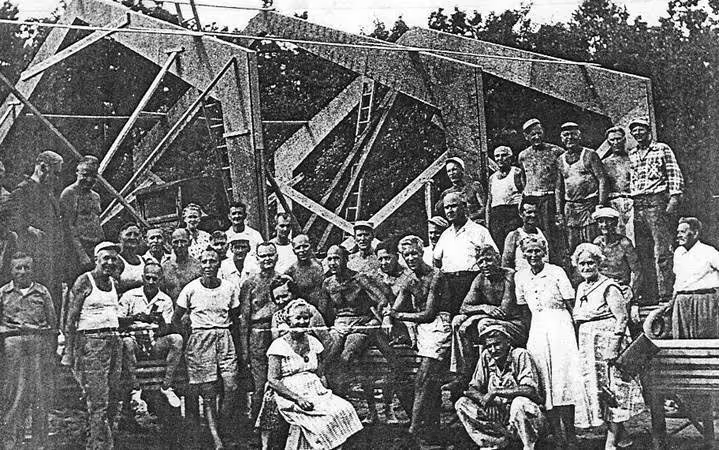
Volunteers from throughout the Estonian community answered the call to help. The New York Men’s Choir participated in work projects, while Felix Simmermann coordinated local volunteers and Paul Eck worked closely with municipal authorities.
During the summer, the building site was cleared and foundations were poured.
On October 18, 1953, a ceremonial cornerstone was laid during a special service led by pastors A. Hinno, H. Hendrikson, and Apostolic Orthodox Archpriest A. Jürisson. A time capsule containing contemporary documents was placed beneath the cornerstone.
The ceremony generated tremendous enthusiasm and strengthened confidence in the success of the project.
1954–1955
The Estonian Home Becomes Reality
Construction continued through volunteer labor. Community organizations and individuals donated both funds and building materials.
Builders from Lakewood assisted with masonry work, and volunteers completed walls, roofing, and structural work. A volleyball court was constructed and quickly became the site of community sporting events and dances.
By the spring of 1955, interior work was being completed in preparation for Midsummer celebrations.
On June 25, 1955, the formal Midsummer program was held inside the newly completed building due to rainy weather.
July 10, 1955
Historic Milestones Were Celebrated
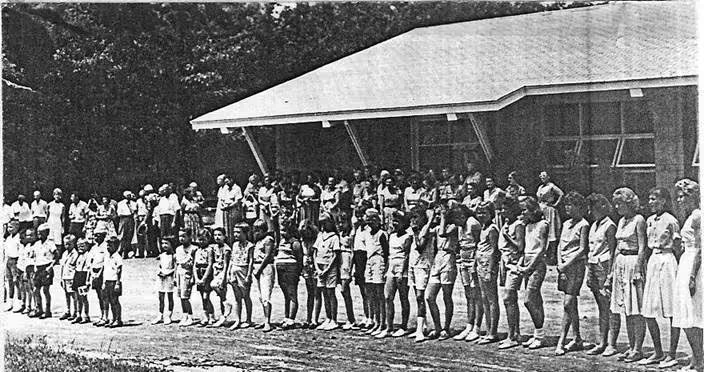
The Long Island Estonian Home was officially consecrated by Pastors R. Kiviranna and E. Kuusler. The first Estonian Children’s Summer Camp opened under the leadership of Pastor Henn Hendrikson. Twenty-five children participated in the inaugural summer program.
1957–1960
Establishing Long-Term Stewardship
In 1957, the Long Island Land Maintenance Committee was renamed the New York Estonian Educational Society – Long Island Management Committee. The committee assumed responsibility for organizing events, managing rentals, overseeing maintenance, and making financial decisions related to the property. Annual activity and financial reports continued to be reviewed and approved by the General Meeting of the New York Estonian Educational Society.
The first chairman of the newly named committee was Felix Simmermann, whose vision and organizational abilities had been instrumental from the very beginning. Simmermann not only initiated the original land purchase but also spearheaded numerous construction and fundraising projects.
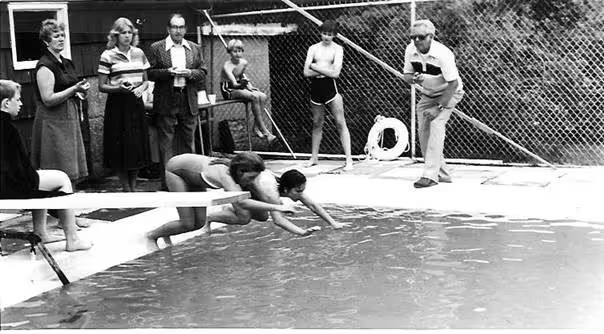
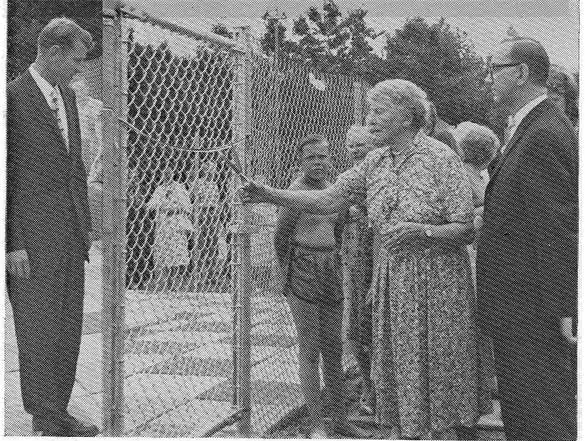
One of the most ambitious projects of this era was the construction of a swimming pool, estimated to cost $5,000. Funding was initially uncertain when the donor passed away before arrangements had been finalized. Fortunately, an entry in Pastor R. Kiviranna’s diary documenting the donor’s intention helped secure the promised inheritance through the courts, allowing the project to move forward.
The 1960s
A Decade of Growth and Volunteerism
The 1960s marked one of the most active and productive periods in the history of the Long Island Estonian Home. While the construction of the main building had involved volunteers from Long Island, New York City, and Estonian communities throughout the region, much of the development work during this decade was carried out by residents of the local Estonian Village and nearby volunteers.
Skilled craftsmen representing virtually every trade donated countless hours of labor. Community members devoted much of their free time to improving the property, and three trucks were available for transporting materials and equipment.
1960–1965
Recreation and New Facilities
A young Estonian engineer, Sven Wichman, who had recently joined Brookhaven National Laboratory and settled in nearby Yaphank with his family, became one of the most influential figures in the development of the property. The Management Committee appointed him technical advisor and project manager.
Wichman was known for his practical skills and hands-on leadership. Under his guidance, many of the facilities that continue to define the Long Island Estonian Home were built.
1968–1970
New Leadership and Community Milestones
On August 26, 1968, Felix Simmermann was elected Chairman of the New York Estonian Educational Society and stepped down as Chairman of the Long Island Management Committee. Sven Wichman was elected as his successor.
In 1969, the sports field was finally completed after years of development.
On August 30, 1969, a ceremonial dedication of the field was held and became one of the largest community events ever organized at the Long Island Estonian Home.The success of the event established Sports Day traditions that continued for many years.
In 1970, construction was completed on a refreshment pavilion, made possible through a $500 anonymous donation.
1971–1973
Security, Expansion, and Preservation
In 1971, one of the original summer camp cottages was converted into a permanent caretaker’s residence equipped with modern facilities.
Despite efforts to recruit an Estonian family to serve as caretaker, no suitable applicants could be found. Eventually, a local police officer accepted the position and moved into the residence on March 7, 1973. His presence significantly reduced vandalism and improved security on the property.
That same year, the Management Committee launched another major initiative: the expansion and beautification of the Estonian Home.
A seven-member construction commission developed plans and approved a budget of approximately $20,000.
1974–1980
Completion of Major Improvements
On December 15, 1974, Sven Wichman announced that increasing professional responsibilities required him to step down as chairman.
Toomas Usman assumed leadership and was formally elected chairman in February 1975.
After Wichman became ill in 1976, Karl Ratasepp was appointed work manager and oversaw completion of the remaining interior construction. Proceeds from the first Saare People’s Festival, totaling $1,500, were donated directly to the construction fund.
Through continued support from organizations, donors, and volunteers—including contributions from Herman Lahesalu—construction projects moved forward.
In March 1980, Vladimir Müürisepp was elected chairman and successfully obtained the official occupancy permit for the main building.
1984–1997
Sustaining the Home
In 1984, Vladimir Müürisepp stepped down and was succeeded by Captain Raul Kukk, a resident of the Estonian Village.
After health concerns forced Kukk to resign in 1986, Oodu Koern became chairman and served until 1997.
During this period, community demographics and participation patterns began to change. Attendance at some events declined, and rental activity decreased. However, the Long Island Estonian Home continued operating thanks to dedicated volunteers, prudent management, and generous bequests from longtime supporters including Ly Usman and Captain Raul Kukk.
These gifts helped offset operating deficits and ensured that church services, community meetings, cultural gatherings, and celebrations could continue serving the Estonian community.
1997–Present
Carrying the Legacy Forward
Since 1997, leadership responsibilities have been shared by Valdur Pratka and Sven Roosild, who have continued the traditions established by previous generations.
The Long Island Estonian Home remains a symbol of cooperation, volunteerism, and shared purpose. Generations of Estonians contributed their labor, expertise, donations, and dedication to create and sustain this unique community gathering place.
The founders’ vision—to create a permanent home for Estonian culture, recreation, education, and community life—continues to guide the Long Island Estonian Home today. The hope remains that future generations will carry forward the same spirit of service and commitment that began with the purchase of five acres of land in Middle Island in 1950.
SINCE
1955
ABOUT
Long Island Estonian Summer Camp
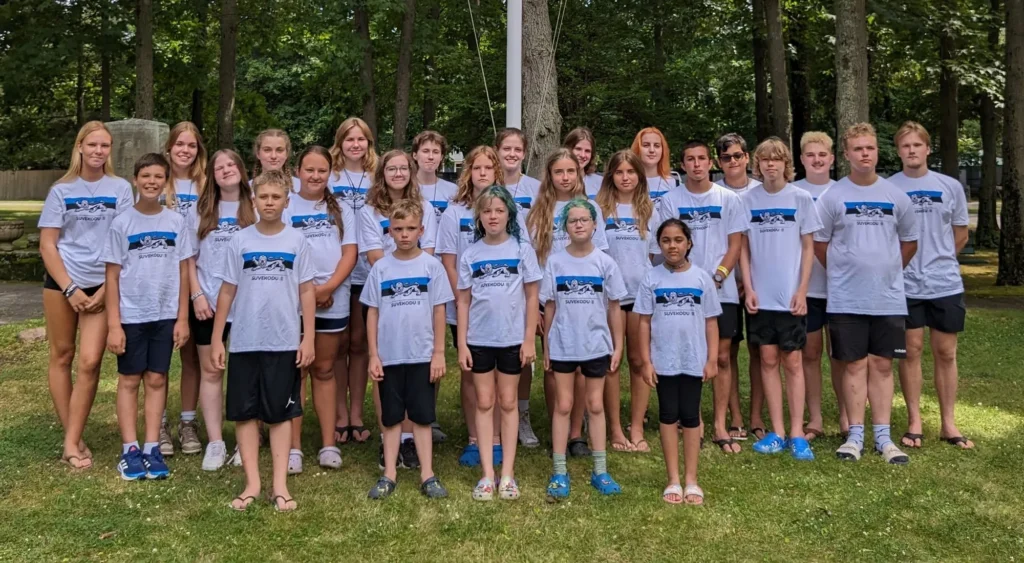
For more than 50 years, Suvekodu (Long Island Estonian Summer Camp) has provided children with unforgettable summers filled with friendship, adventure, and a connection to Estonian culture. First established in 1955, the camp has welcomed generations of children to Middle Island, New York, and continues to be one of the most cherished traditions of the Estonian-American community.
Held each July on the beautiful grounds of the Long Island Estonian House, the camp offers a unique environment where children can enjoy the outdoors, build lifelong friendships, and strengthen their connection to their Estonian heritage. The 15-acre property features a swimming pool, sauna, basketball courts, athletic fields, and open green spaces that provide the perfect setting for recreation and discovery.
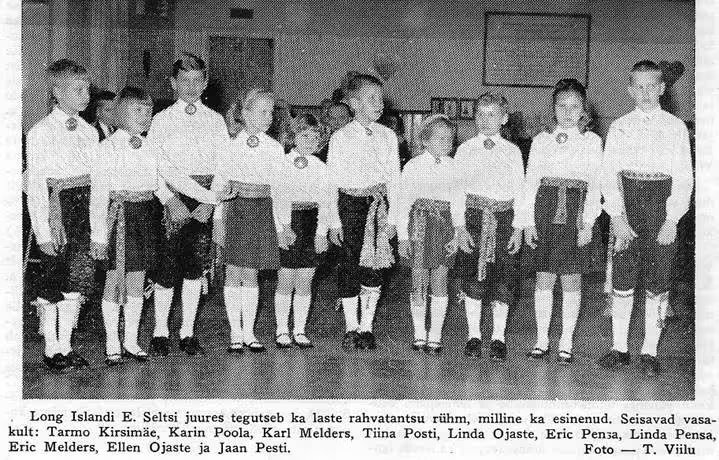
Children ages 6–15 are welcomed and grouped by age to ensure age-appropriate activities and experiences. While some programs bring all campers together, others are tailored to specific age groups. Daily activities include a blend of Estonian cultural programming, singing, folk dance, arts and crafts, sports, swimming, games, and free time to relax and enjoy the summer atmosphere.
Evenings are filled with memorable events such as talent shows, dances, campfires, pool parties, and other special activities that create lasting memories and friendships. Instruction and activities are conducted in both Estonian and English, making the camp welcoming and accessible to children with varying levels of language proficiency.
Operating under the auspices of the New York Estonian Educational Society, Suvekodu is made possible through the dedication of volunteers who generously contribute their time and talents to create a safe, enriching, and fun experience for every camper.
At Suvekodu, children don’t just attend camp—they become part of a tradition that has connected generations of Estonian families through culture, friendship, and community since 1955.
Life at Suvekodu
From swimming and sports to campfires, cultural activities, and lifelong friendships, discover the experiences that make every summer at Suvekodu special.
Eesti kooli lõpuaktus / Estonian School Graduation
Eesti kooli jõulupidu / Estonian School Christmas Party
No galleries match your filters.